
The Evolution of Network Reliability: Beyond Traditional Change Management
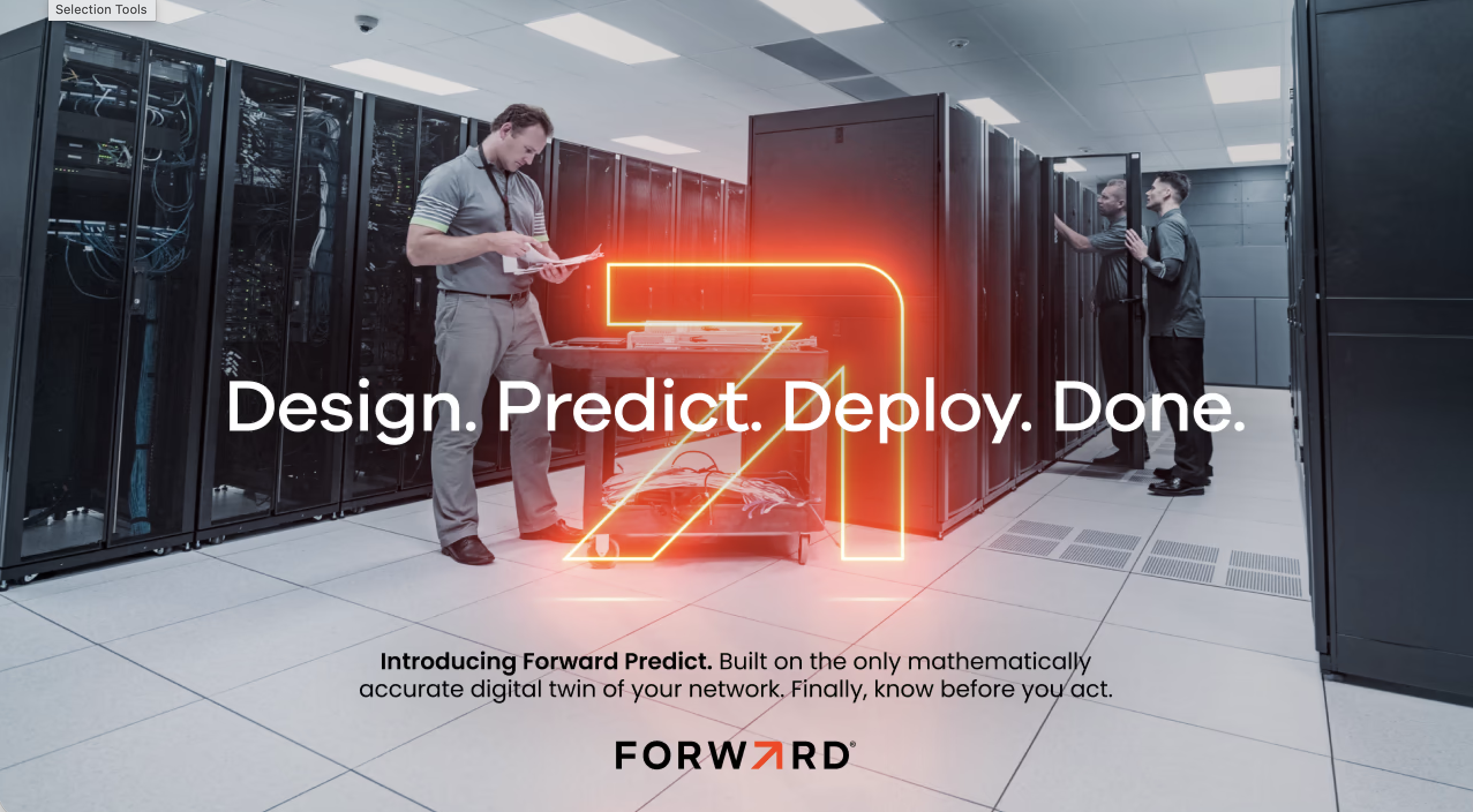
Forward Inc., formerly known as Forward Networks, has unveiled Forward Predict, a sophisticated software solution designed to simulate the ramifications of network modifications prior to their implementation. While some might categorize this as a routine feature enhancement, it represents a profound paradigm shift. As artificial intelligence moves from the experimental phase to the bedrock of enterprise operations, the network can no longer function as a passive utility; it must become a verifiable, programmable infrastructure.
The AI-Driven Network Equation
For years, network architecture was treated as the plumbing of the enterprise—essential, yet static and largely ignored until a failure occurred. Today, the network serves as the foundational application platform for all digital business. Integrating AI into this ecosystem introduces three critical stressors that traditional management practices are ill-equipped to handle:
Increased Architectural Complexity: Modern AI workloads are highly distributed. Data traverse complex, dynamic paths across on-premises data centers, diverse cloud providers, and edge endpoints, creating traffic patterns that defy legacy static configurations.
Escalating Costs of Failure: In a legacy environment, downtime might inconvenience internal users. In an AI-enabled enterprise, a network disruption can freeze real-time decision engines, derail customer-facing automation, and jeopardize safety-critical systems.
* Hyper-Accelerated Lifecycle Cycles: The rapid pace of AI model evolution and fluctuating data requirements necessitate frequent infrastructure scaling and configuration updates, shrinking the time available for standard change management.
The Crisis of Modern Change Management
Despite the growing complexity of these systems, the industry still relies on a labor-intensive, reactive change management process. Engineers remain shackled to a cycle of design, manual review, and high-stakes deployment. When production becomes the primary testing ground, war rooms become an inevitable ritual—a tacit acknowledgment that operational teams function without a clear understanding of what a change might provoke.
The danger extends beyond overt outages. Misconfigurations frequently introduce invisible vulnerabilities—latent security gaps or performance bottlenecks that go unnoticed for months, only to manifest when environmental conditions shift. In almost every other field of advanced engineering, such as semiconductor fabrication or aerospace, practitioners rely on rigorous mathematical simulation. Networking, until now, has largely relied on informed optimism.
Forward Predict: Implementing CI/CD for Infrastructure
Forward Predict bridges this gap by leveraging the company’s established digital twin technology. By creating a mathematically verified representation of the entire network—from physical hardware and vendors to Layer 2-7 protocols—the platform moves the focus from reactive troubleshooting to proactive validation.
Much like Continuous Integration/Continuous Deployment (CI/CD) pipelines have transformed software development by allowing developers to test code against validated criteria, Forward Predict forces the network to adhere to the same rigorous standards. Engineers can model proposed changes against the digital twin, simulating complex control-plane behaviors like BGP and OSPF convergence. This provides a deterministic pass/fail outcome before a single piece of hardware is touched.
Building Trust in Autonomous Networking
The potential for autonomous networking hinges on one key factor: trust. Organizations are understandably hesitant to allow AI to generate and execute network optimizations if they cannot verify the outcome. Forward Predict functions as a compiler for the network, providing the evidentiary layer necessary to justify automation.
By integrating predictive modeling into AI workflows, companies can create a self-correcting feedback loop: the AI proposes a change, the system simulates the impact, validates against internal policies, and iterates until the configuration meets the desired state. This capability allows operations teams to shift from the role of manual overseers to that of policy setters, significantly increasing velocity without increasing the risk profile.
Ultimately, the launch of Forward Predict underscores an industry-wide transition. The goal is no longer merely to maintain uptime; it is to achieve total predictability. As the network becomes the center of gravity for AI initiatives, the ability to reason about network behavior in a simulated environment before deploying into the wild will evolve from a competitive advantage to a fundamental prerequisite for enterprise survival.