
Bridging the Gap: How Google’s Project Genie and Street View are Redefining Spatial AI
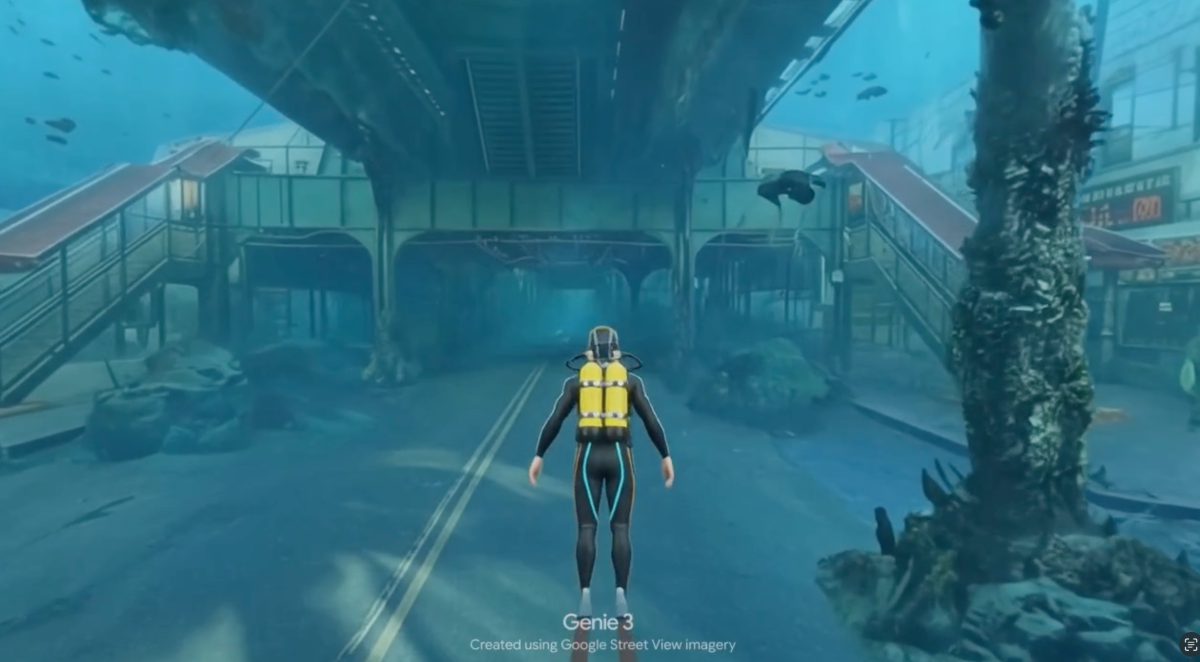
At Google I/O 2026, the company unveiled a pivotal evolution in its generative AI strategy: the integration of two decades of Street View imagery into Genie, its proprietary world model. While Street View has long served as a static window into the physical world, merging it with generative simulation marks a transition from simple observation to dynamic, interactive environment modeling.
This move underscores a broader industry shift where static neural networks—those limited to image recognition or text generation—are being superseded by world models capable of internalizing the structural constraints of the physical environment.
The Mechanics of Immersive Simulation
Project Genie, now in its third iteration (Genie 3), differs from traditional video generation tools by focusing on spatial continuity. While AI video generators like Veo excel at rendering aesthetic scenes, they often lack the geometric consistency required for interactive experiences. Google’s latest breakthrough lies in the model’s ability to maintain a 360-degree memory of an environment. When a user navigates a generated space, the system preserves the spatial relationship between objects, enabling a persistent, navigable world rather than a fleeting visual sequence.
By seeding this model with over 280 billion images from Google’s Street View archive—a dataset spanning seven continents and decades of infrastructural shifts—Google is effectively mapping the human domestic and urban landscape into a latent space that can be manipulated through text or image prompts.
Strategic Implications for Robotics and Waymo
The most immediate industrial application of this technology is the advancement of “edge-case” training for autonomous systems. Waymo, Google’s autonomous driving unit, currently utilizes proprietary simulators to refine its AI drivers. However, standard simulators often rely on synthetically generated environments that may fail to account for the chaotic, unpredictable variables of real-world physics.
By pipeline-feeding real-world Street View data into Genie, developers can create high-fidelity, interactive training grounds. This allows robotics engineers to simulate rare scenarios—such as extreme weather variations or unexpected urban obstacle patterns—providing a safer and cheaper alternative to physical testing. The capability to adjust temporal variables, such as shifting a London street scene from a gloomy, overcast day to a stark, sunlit morning, is critical for training vision systems that must remain robust under fluctuating lighting conditions.
Current Limitations: The Physics Gap
Despite the technical leap, Google DeepMind remains transparent regarding the model’s current maturity. One of the most significant challenges is physics awareness. While the model excels at structural consistency, it currently struggles with interactive cause-and-effect dynamics. As demonstrated during the preview, entities within these simulations often bypass environmental obstacles, failing to adhere to basic physical interactions like collision detection.
Industry analysts observe that this limitation places world models roughly 6 to 12 months behind video-generation AI in terms of photorealistic accuracy and behavioral logic. Unlike static imagery, which requires color and texture synthesis, world models must implicitly learn the rules of gravity, velocity, and object permanence. Google’s researchers anticipate that as these models encounter more observational data, they will shift from crude approximations to more sophisticated physical interpretations, mirroring the observational learning process of biological intelligence.
The Shift Toward Interactive World Models
The integration of Street View into Genie signifies the end of passive mapping. By creating a sandbox where developers and users alike can simulate, alter, and navigate real-world locales, Google is positioning its AI not just as a search engine or an assistant, but as a foundational infrastructure for digital twins.
For the average user, this means the future of exploration will be highly customizable, allowing them to experience geographic locations under specific conditions or historical contexts. Practically, this is a massive leap in how we prepare AI agents to operate within the messiness of our reality, moving beyond the sterile vacuum of training data into a nuanced, simulated version of our actual surroundings.