
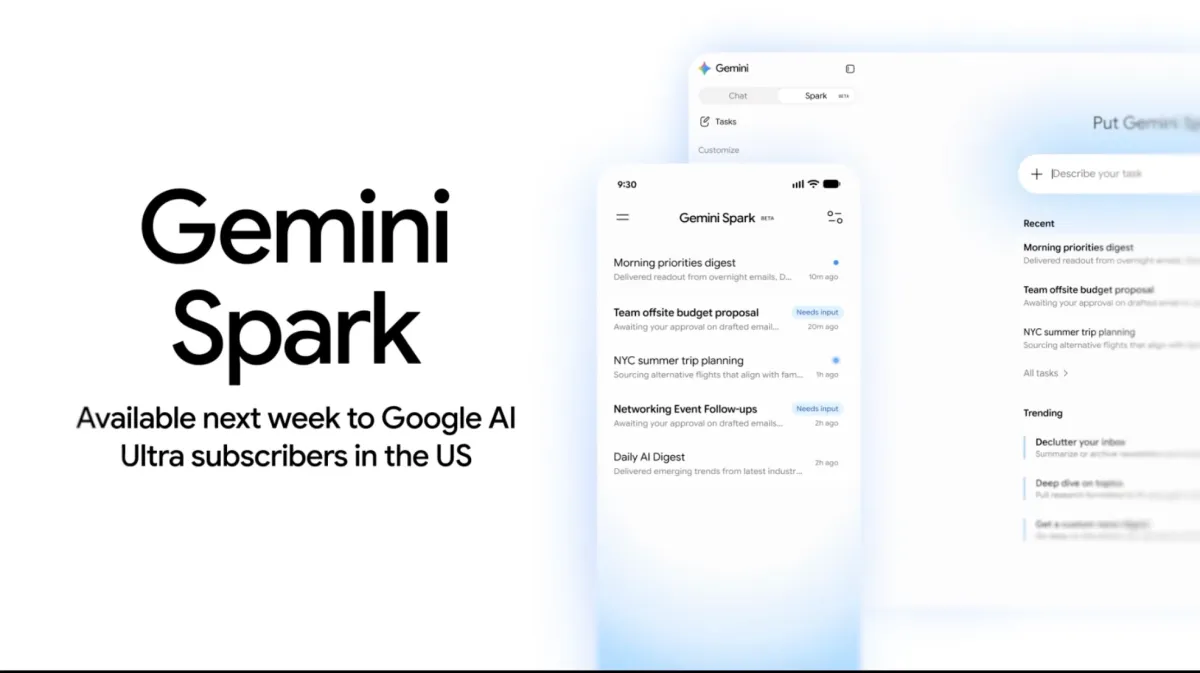
The Strategic Leverage of Data Continuity
Google’s introduction of Gemini Spark at this year’s I/O conference marks a definitive shift in the AI agent landscape. While competitors like OpenAI and Anthropic are aggressively building standalone agentic frameworks, Google possesses a structural advantage that is difficult to replicate: total longitudinal data ownership. By embedding Gemini Spark directly into the existing ecosystem of Gmail, Docs, and Drive, Google is positioning its agent not as a portal to be accessed, but as a persistent layer of intelligence woven into the user’s primary workspace.
The core breakthrough here is the agentic harness developed by the Google Antigravity team. By leveraging dedicated virtual machines within Google Cloud, Spark operates independently of the user’s active hardware state. This solves the primary friction point of current desktop-based automation, where tasks remain tethered to the availability of an active device.
Redefining Long-Horizon Task Management
The industry has moved beyond simple query-response chatbots into the era of agentic workflows—AI capable of managing complex, multi-step projects with minimal human intervention. Gemini Spark’s capability to parse historical data across scattered Google Workspace apps to draft communications or manage customer inquiries suggests a pivot toward high-intent automation.
For the enterprise and small business sectors, this is transformative. By automating the extraction of data from Sheets, Slides, and Gmail, Spark effectively creates a semantic bridge across the entire Google suite. This eliminates the silo problem where valuable organizational context is trapped in disparate formats, allowing the AI to act with a holistic view of the user’s digital history.
Competitive Positioning in the Agentic War
The integration of the Model Context Protocol (MCP) into Spark is perhaps the most significant strategic maneuver. By ensuring compatibility with a wide range of external services, Google is signaling that it aims to keep Gemini Spark at the center of the user’s workflow while avoiding the walled garden criticism that often plagues major tech ecosystems.
While OpenAI’s ChatGPT agent and Anthropic’s Claude Cowork focus on creative throughput and analytical output, Google is playing a game of ubiquity. The ability to interact with Spark via a dedicated Gmail address and monitor its progress through the Android Halo system creates an omnipresent feedback loop that competitors—lacking a native mobile OS—struggle to match.
The Implications for Digital Infrastructure
When Gemini Spark launches to Google AI Ultra subscribers next week, it will serve as the first real-world stress test for agentic, 24/7 autonomous labor. If successful, this marks the beginning of the end for manual content synthesis and inbox management. However, this shift necessitates a broader conversation regarding agency and privacy. As Spark gains the ability to interact with the web via Chrome and act on the user’s behalf, the threshold for trust becomes significantly higher.
Google is evidently betting that users will prioritize convenience and the sheer volume of time saved through deep integration over the friction caused by external third-party tools. If Spark proves as reliable as the company claims, it will effectively turn the entire Google ecosystem into an automated office suite, raising the barrier to entry for any competitor that cannot offer similar levels of deep-system integration.