
Bridging the AI Memory Gap: Redis Moves Toward an Agentic Operating System
The maturation of autonomous AI agents is currently hitting a significant technical ceiling: the inability to maintain coherent, real-time context. While Large Language Models (LLMs) excel at processing information, they struggle to retain the necessary state to handle complex, multi-step business workflows. Redis Inc. is aggressively positioning its platform to solve this by launching its new Context Engine, a foundational layer designed to transition AI from conversational interfaces to autonomous, high-utility enterprise workers.
Transcending the Limitations of Brittle Integrations
Current enterprise AI frequently falters because integration strategies are reactive and fragmented. When an AI agent attempts to resolve a customer service request, it often must query disparate databases—ranging from CRM systems to static policy documentation—in real-time. Without a centralized architecture, these connections are frequently brittle, slow, and prone to failure.
Redis is addressing this by inserting a dedicated middleware layer between the agent and the corporate data stack. By leveraging its proven in-memory performance, Redis provides a high-speed agent-readable view of the environment. This effectively allows the agent to navigate business entities and their internal relationships with structural awareness, rather than blindly parsing unstructured text.
Deconstructing the Context Engine Architecture
The Context Engine is built on three pillars, each designed to standardize how agents interact with latent enterprise data:
- Redis Context Retriever (Preview): This tool moves beyond unreliable text-to-SQL queries by allowing developers to build semantic models of their business logic. By utilizing the open-source Model Context Protocol, the retriever creates a standardized interface that allows agents to fetch accurate, highly specific data without falling into the hallucination trap caused by incomplete information.
- Redis Agent Memory (Preview): This represents a critical evolution in state management. It utilizes a dual-layered approach: a high-speed cache for immediate, session-based interaction history, and a durable, long-term memory store. By retaining user preferences and past interaction patterns across sessions, agents can provide personalized, continuous support.
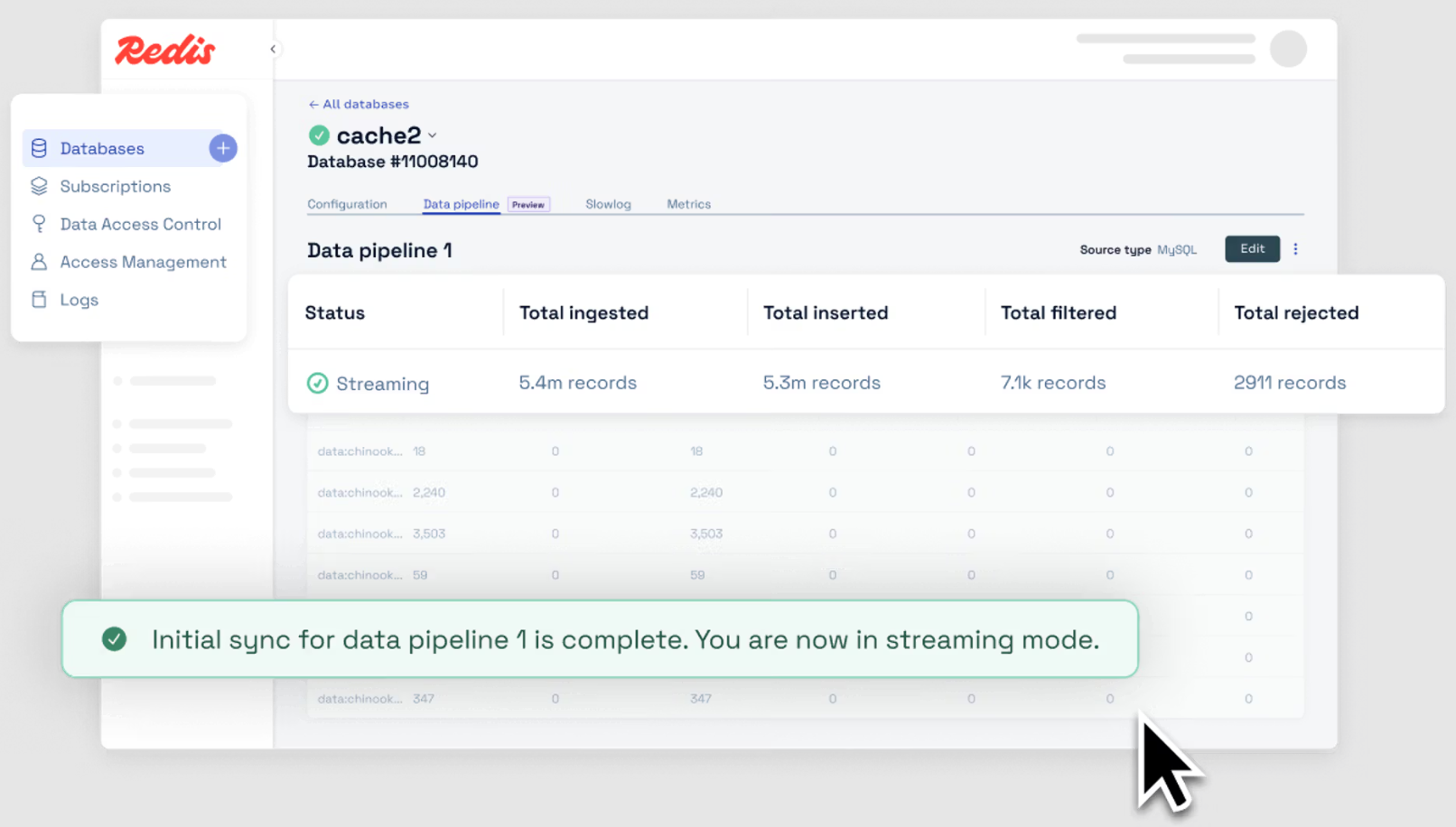
- Redis Data Integration (Generally Available): This provides the crucial synchronization layer. By continuously piping data from relational databases and warehouses into the Redis environment, the engine ensures agents are always operating on a current version of the truth, rather than stale, outdated datasets.
Strategic Implications: Redis as an AI Operating System
The launch of the Context Engine signals a bolder ambition for Redis. With its technology already deeply embedded in 43% of enterprise AI agent stacks, the company is attempting to pivot from being a mere high-speed cache to becoming the cognitive operating system for the next generation of business agents.
For the enterprise, the value proposition is clear: reliability. By consolidating data management into a single, specialized layer, organizations can reduce the overhead required to maintain custom-coded integrations. This allows AI teams to focus on agent utility and performance rather than debugging fragile infrastructure.
If successful, this transition will cement Redis as the infrastructure of record for autonomous agents. As enterprises shift from experimental chatbots to deep-process automation, the winner of the AI race will likely be the vendor that best manages the context problem, effectively serving as the nervous system that brings disparate data, memory, and logic together.