
Market Debut Signals Paradigm Shift in AI Infrastructure
Cerebras Systems Inc. officially commenced public trading today with a resounding opening price of $350 per share. This figure represents an 89% surge over its initial offering price, underscoring a massive appetite for alternatives to Nvidia-dominated infrastructure. By closing its IPO at $185 per share—significantly higher than the projected $150–$160 range—the company has secured a valuation of $100 billion.
The $5.5 billion raised during this offering marks the largest technology IPO since the 2019 debut of Uber and signals a broader thawing of the capital markets for high-growth hardware firms. This enthusiasm is set against a backdrop of historic performance in the semiconductor sector, where stalwarts like AMD, Intel, and Micron have experienced aggressive valuation growth over the past year.
Navigating Revenue Concentration and Strategic Evolution
Cerebras’ path to the public markets was fraught with institutional skepticism. Initial filings in 2024 were shelved following intense scrutiny regarding the company’s dependency on G42, an AI firm based in the UAE. At the time, that single customer represented 80% of total revenue, a concentration risk that exacerbated concerns surrounding international security reviews.
In a decisive strategic pivot, the company retooled its business model. By de-emphasizing proprietary hardware system sales in favor of a consumption-based, cloud-hosted model, Cerebras transformed itself into a direct competitor to CSPs (Cloud Service Providers) like AWS, Google Cloud, and Oracle.
While revenue concentration persists—with the Mohamed bin Zayed University of Artificial Intelligence now accounting for 62% of revenue—the market is pricing in the long-term potential of the company’s enterprise pipeline, most notably its $20 billion compute-capacity agreement with OpenAI.
The Technical Edge: Why Inference Matters
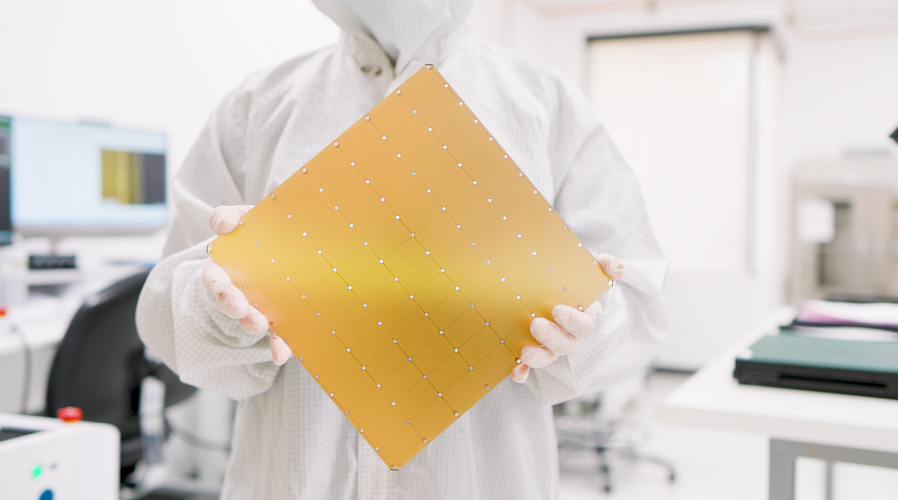
The core value proposition of Cerebras lies in its Wafer-Scale Engine (WSE-3), a radical departure from the architecture favored by GPU manufacturers. By utilizing an unconventional wafer-scale design, the WSE-3 bypasses the bottleneck associated with standard chip-to-chip data transmission. Its integration of 44 gigabytes of high-speed SRAM allows for ultra-low latency, effectively enabling the execution of complex AI models at speeds that traditional discrete GPU setups struggle to replicate.
Industry observers, including Holger Mueller of Constellation Research, suggest that Cerebras has successfully carved out a niche as the preeminent alternative for AI inference. Because inference is where the bulk of AI-related operational expenditure occurs at scale, any hardware capable of reducing cost-per-token or latency will naturally attract massive capital interest.
Broader Industry Implications
The success of the Cerebras IPO acts as a bellwether for the semiconductor industry. For years, the market has functioned as an Nvidia-or-nothing ecosystem. Cerebras’ ability to secure a $100 billion valuation confirms that investors are eager to diversify their portfolios into specialized, application-specific silicon.
This momentum likely bolsters the valuation prospects for upcoming high-profile exits such as SpaceX, Anthropic, and OpenAI. As these entities prepare for their own public debuts, the narrative shift from general-purpose graphics units to performant AI-optimized silicon will likely dominate boardroom discussions for the remainder of the fiscal year.
For enterprise customers, this shift is optimal. The democratization of AI compute options serves to lower the total cost of ownership (TCO) for massive AI deployments, effectively increasing the flywheel effect of technical innovation. With major cloud providers like AWS already integrating Cerebras’ chips into their cloud ecosystems, the company is no longer just a hardware manufacturer; it is now a foundational layer for the next generation of generative AI applications.