
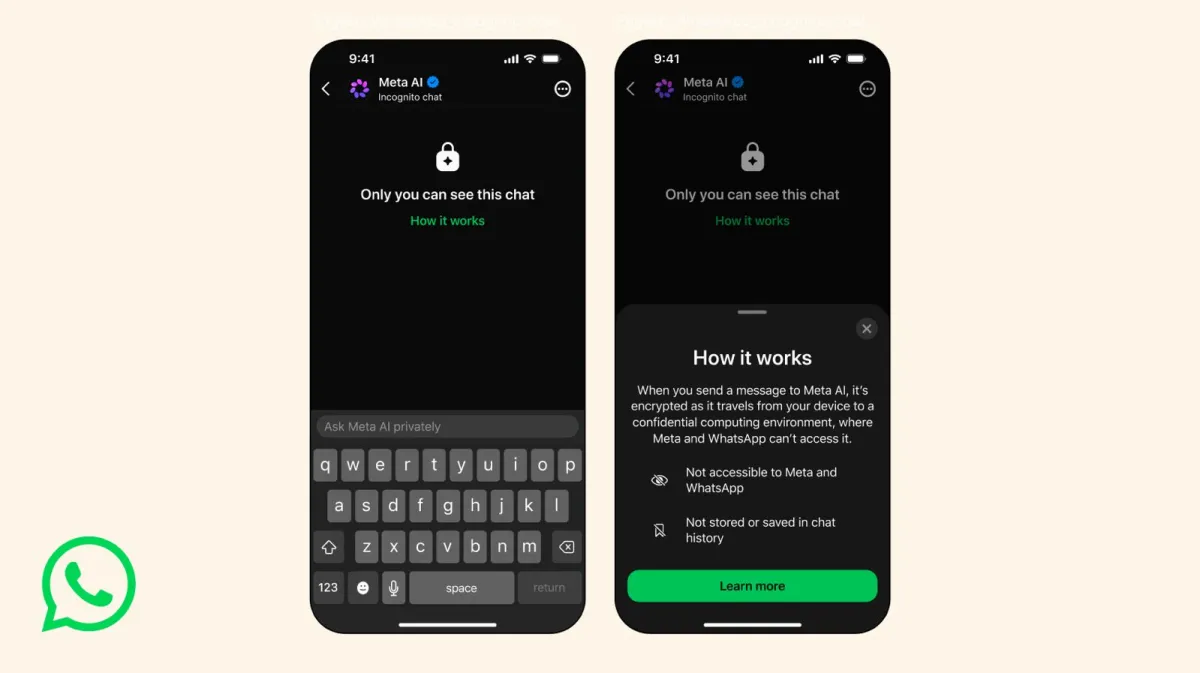
Meta Elevates Privacy Standards for AI Interactions
Meta is fundamentally shifting its approach to artificial intelligence within the WhatsApp ecosystem, introducing incognito chat sessions designed to decouple user queries from persistent data storage. By enabling a secure processing environment, Meta is addressing the growing consumer anxiety surrounding the permanence of AI training data and the potential for surveillance.
This transition marks a strategic pivot. By allowing users to conduct ephemeral sessions that vanish the moment a window closes or a device locks, Meta is positioning its AI as a utility rather than a data-collection engine. This functionality will be integrated directly into WhatsApp and the standalone Meta AI app, providing a consistent experience across the company’s primary service interfaces.
Deepening Architectural Trust
The introduction of incognito mode is not merely a user-interface update; it represents a significant advancement in engineering. Meta has long prioritized the challenge of maintaining end-to-end encryption while enabling AI features that require cloud-side processing. By leveraging the recently debuted Muse Spark model—an upgrade from the smaller, less capable architectures previously utilized—Meta is demonstrating that privacy-centric deployment does not have to come at the expense of model performance.
This infrastructure is the backbone of Meta’s future roadmap. A notable upcoming feature, Side Chat, intends to allow users to pull the AI assistant into group threads to answer private inquiries without the interaction being visible to other chat participants. This functionality solves a significant friction point in professional and social mobile communication, where users currently have to toggle between apps to verify information or draft responses.
Industry Implications and Competitive Pressure
Meta is navigating a crowded landscape. Competitors like OpenAI’s ChatGPT and Anthropic’s Claude have already implemented privacy toggles, and privacy-focused entities like DuckDuckGo and Proton have successfully carved out niches by marketing their chatbots as zero-retention services.
Beyond product competition, Meta faces mounting legal pressure. Recent expert analysis suggests that AI interaction histories could potentially be subpoenaed or used as evidence in litigation, creating a significant liability for users. By fostering an ecosystem of ephemerality—where context is wiped upon session termination—Meta is shielding both itself and its user base from the risks inherent in long-term conversation storage.
Ultimately, this move signals that privacy has transitioned from a backend consideration to a central competitive feature. As AI assistants become more integrated into daily workflows, the market is signaling that users will no longer tolerate models that treat every interaction as an opportunity for data ingestion. For Meta, mastering the balance between complex AI utility and ephemeral privacy is the key to maintaining WhatsApp’s dominance as a secure communication platform.