
The Financialization of AI Infrastructure
The rapid evolution of artificial intelligence has transitioned compute from a mere utility into the world’s most critical commodity. To manage this volatility, CME Group has entered a strategic partnership with Silicon Data to launch a futures market specifically designed for AI compute. By leveraging Silicon Data’s benchmarks, this platform allows market participants to hedge against the erratic price hikes associated with GPU-accelerated cloud resources.
For decades, futures markets have served as the bedrock for pricing commodities like crude oil or precious metals. Applying this model to AI compute represents a significant shift in how hyperscalers and enterprises view data center capacity. As GPU availability remains tight and demand from massive AI training workloads continues to outpace supply, the ability to lock in long-term pricing provides a crucial mechanism for fiscal stability.
Establishing the GPU Forward Curve
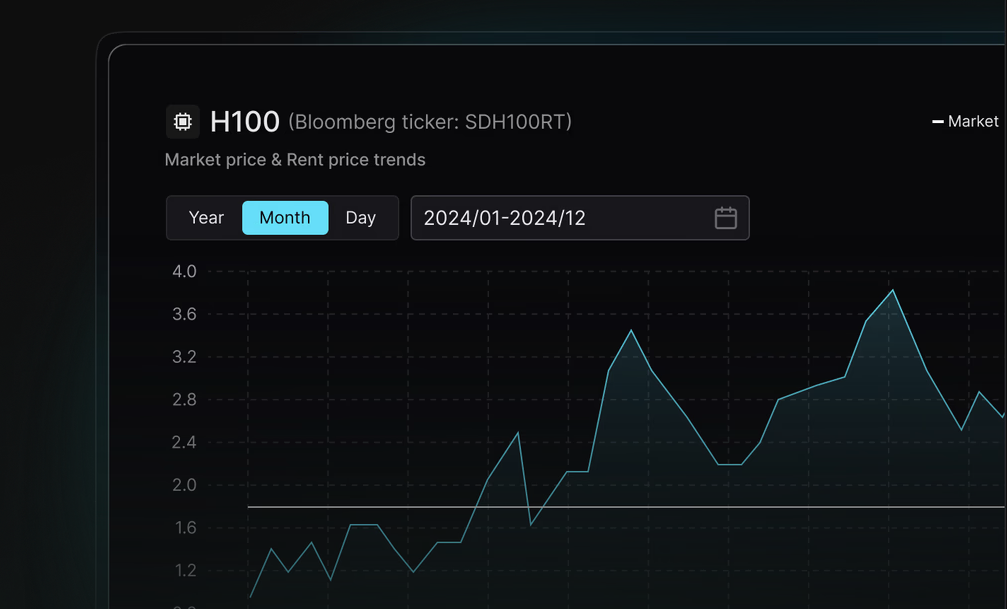
Silicon Data’s emergence as the index provider for this market is built upon its recently launched GPU Forward Curve service. By standardizing the anticipated costs of compute capacity, the firm has moved beyond basic analytics to facilitate the formal financialization of AI hardware assets.
CEO Carmen Li argues that this framework is essential for long-term planning, noting that until now, GPU markets lacked the transparent reference pricing necessary for institutional-grade valuation. With standardized metrics now in place, stakeholders can mitigate the risks inherent in the current gold rush era of cloud infrastructure procurement, where spot prices for cycles remain notoriously unstable.
Industry Implications: Scaling Beyond Brute Force Compute
Analysts observe that this market evolution arrives at a pivotal juncture. Industry trends indicate that demand for high-density compute is not merely a transient spike but a structural shift. Morgan Stanley’s Shawn Kim recently noted that the future of AI will rely on a hybrid, distributed architecture—coupling dense GPU racks for parameter processing with agentic CPU racks optimized for orchestration and tool execution.
As major cloud service providers (CSPs) like AWS, Google, Microsoft, and Meta aggressively hike their capital expenditure budgets, the ripple effect is felt across the entire semiconductor supply chain. Memory chip providers, in particular, have seen valuations skyrocket as data center demand hits unprecedented levels.
Mitigating Risks in a High-Velocity Market
The implementation of compute futures serves as a stabilizer for an industry that has been volatile since the onset of the generative AI boom. For enterprise leaders, the risk of a compute bottleneck is now a top-tier business concern.
By allowing investors and data center operators to hedge their positions, this infrastructure provides a layer of insurance against the capital intensity of modern platform building. As compute becomes increasingly abstracted from the silicon itself, the financial instruments surrounding this technology are finally catching up, signaling a maturation of the AI infrastructure market from an speculative frontier into a sophisticated, investable ecosystem.