
The Evolution of Localized AI Autonomy
Perplexity has officially transitioned its Personal Computer agent from a restricted beta for Max subscribers to a general availability release for all macOS users. This strategic move signals an aggressive pivot toward the on-device AI paradigm, a segment currently being shaped by pioneers like OpenClaw. By shifting AI operations from a purely cloud-based interaction model to a local, file-aware ecosystem, Perplexity is attempting to solve the biggest hurdle in generative AI: context fragmentation.
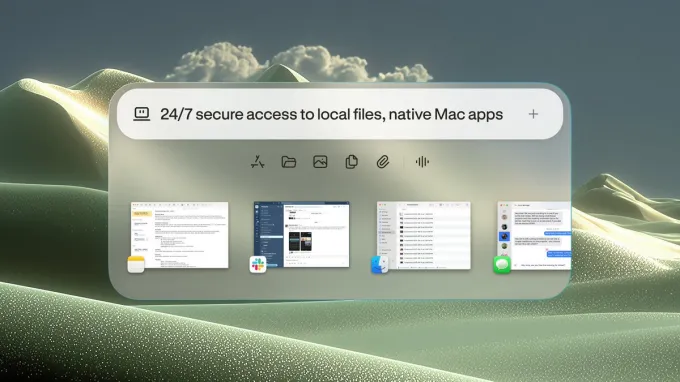
Most large language models exist in a silo, detached from the proprietary data residing on a user’s drive. Perplexity’s new architecture bridges this gap by granting its agent permissioned access to local files, native applications, and an extensive library of over 400 connectors.
Security, Privacy, and the Agentic Workflow
The primary argument for Perplexity’s entry into this space is the promise of secure, task-oriented autonomy. While early iterations of local agents—most notably OpenClaw—garnered criticism for requiring dangerous levels of system permissions, Perplexity is framing its implementation as a managed, secure development environment.
This is a critical distinction for enterprise and power users who are typically wary of giving LLMs root-level access to their machines. By processing workflows through a combination of local context and server-side orchestration, Perplexity is attempting to create a safe zone for automation. Whether this security architecture holds up under sustained scrutiny remains to be seen, but it clearly addresses a major barrier to the mass adoption of AI agents.
Operational Synergy: Beyond the Browser
The utility of a Personal Computer becomes evident when dealing with fragmented, multi-step tasks. Because the agent can operate across different applications—pulling data from a spreadsheet, synthesizing notes from a word processor, and drafting content in a third—it moves beyond the chat-and-answer paradigm.
The integration with the Comet browser further underscores this strategy, allowing the agent to interact with web-based interfaces that lack native APIs or existing connectors. By removing the need for manual navigation between tabs, Perplexity is leaning into an agentic future where the AI acts as the user, and the user acts as the supervisor.
Strategic Implications for the Mac Ecosystem
The company’s decision to deprecate its legacy Mac app in favor of this new, agent-centric software is a strong signal that Perplexity considers General Artificial Intelligence to be a hardware-reliant endeavor. Furthermore, the remote access capability—which allows an iPhone to serve as a command center for a Mac Mini running continuous agentic workflows—hints at a future where our devices function less like individual computers and more like distributed computational nodes.
For the industry, this signals that the browser is no longer the final frontier for AI companies. The next battleground is the operating system itself. By distributing their software as a direct download rather than via the Mac App Store, Perplexity is also signaling a desire for deeper kernel-level integration and a desire to bypass the restrictive sandboxing policies that could stifle agentic performance. This is not just a feature update; it is a fundamental shift toward an operating system that thinks, organizes, and executes on the user’s behalf.