
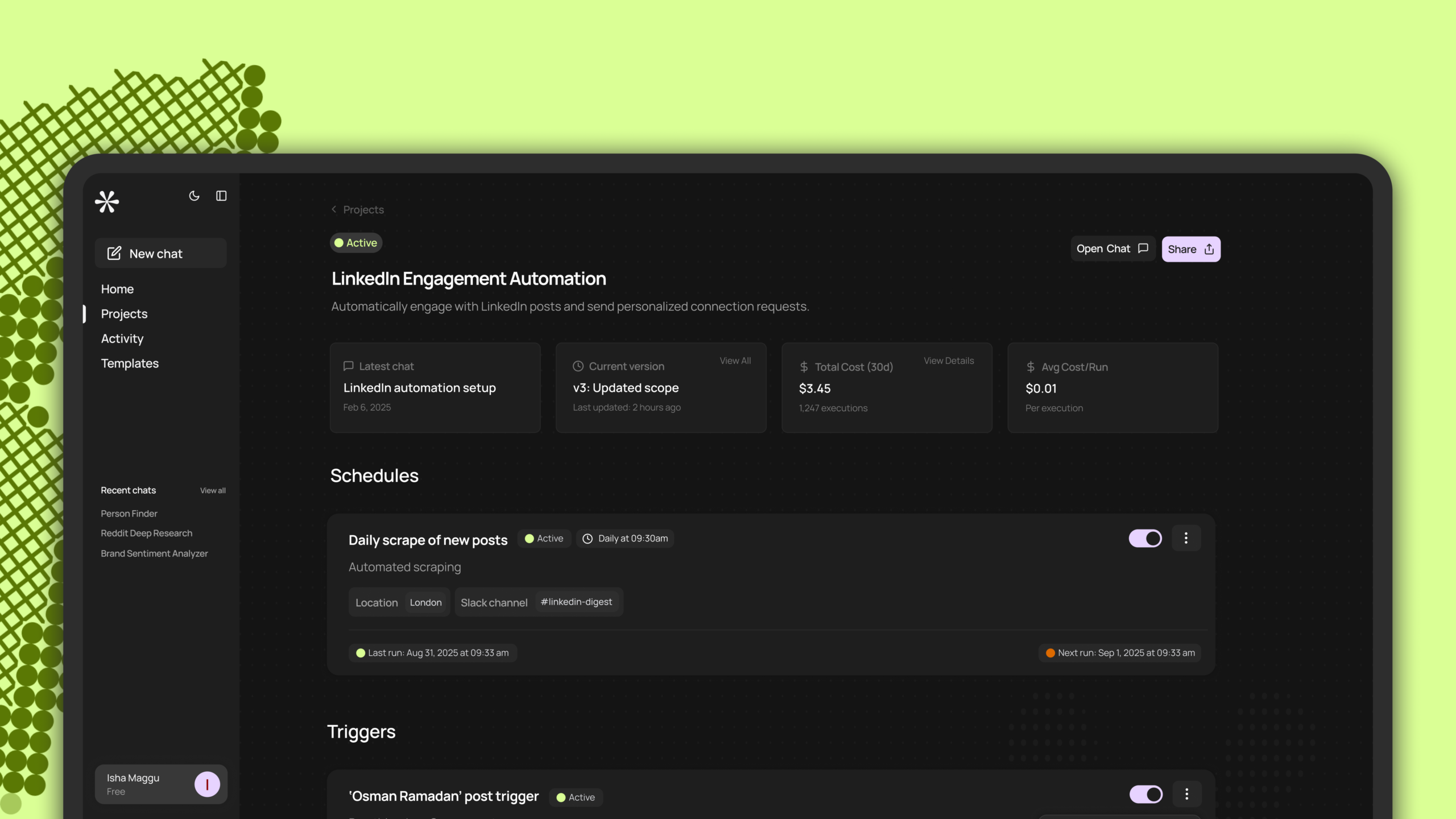
Redefining Agentic Workflows: CodeWords Secures $9 Million to Automate the Invisible
Agemo AI Ltd., the entity behind the CodeWords platform, has secured $9 million in seed funding to push the boundaries of autonomous business operations. The round was led by Visionaries, with follow-on participation from firstminute Capital, alongside contributions from Sequel and Illusian—the latter a Helsinki-based investment vehicle co-founded by Supercell CEO Ilkka Paananen.
This injection of capital signals a pivotal shift in how the industry approaches AI integration. Rather than treating artificial intelligence as a passive tool or a chatbot awaiting explicit prompts, CodeWords is positioning its agent, Cody, as a proactive operational participant.
The Shift from Responsive to Proactive AI
The traditional no-code interaction model—where users identify a bottleneck, pivot to an AI builder, and manually construct a workflow—is inherently reactive and time-intensive. It suffers from a knowledge gap; the AI must be briefed on context, business logic, and tool stack every time a new workflow is envisioned.
CodeWords is attempting to bypass this friction entirely. Cody operates fundamentally differently: it functions as a background observer that monitors a business’s digital ecosystem, including messaging channels, operational platforms, and existing integrations. By internalizing metadata from day one, the agent moves beyond simple task execution to autonomous workflow recommendation and construction.
Implications for Enterprise Operations
This background agent architecture suggests significant long-term implications for the SaaS and automation markets. By handling deployment, maintenance, and setup internally, CodeWords is effectively lowering the barrier for non-technical staff to build sophisticated, multi-tool workflows.
The ability to bridge disparate ecosystems—connecting, for instance, cloud storage, project management software, and electronic signature services without direct human code-writing—is a hallmark of the new agentic era. Current metrics indicate this approach is scaling rapidly, with Cody currently processing over 500,000 tasks per month. The use cases span from complex finance-related deal tracking to high-frequency agency content cycles, proving that autonomous systems are beginning to handle multi-step, logic-heavy business processes reliably.
Platform Evolution: Contextual Intelligence
To support its growth, CodeWords has introduced three critical capabilities designed to harden its agent’s utility:
Contextual Memory: This allows the system to retain knowledge of operational nuances, ensuring the agent does not repeat historical mistakes and accumulates institutional knowledge over time.
WhatsApp Integration: By embedding itself into communication platforms, Cody transitions from an isolated automation script to an interactive team member capable of providing updates and requiring human sign-off in real-time.
Cody Modes: This feature provides the agent with variable logic, allowing it to toggle its planning and execution strategies based on the complexity or urgency of the task at hand.
Market Context
CodeWords’ success in raising capital in a crowded AI agent landscape underscores a growing investor appetite for sticky platforms. While many competitors focus on temporary AI scaffolding or basic task chaining, CodeWords is banking on long-term integration. For businesses, the value proposition is clear: if an agent can autonomously learn and improve workflows without constant manual oversight, the operational overhead saved could be monumental.
However, the efficacy of this approach will depend on the platform’s ability to maintain data security and handle increasingly complex edge cases. As Cody continues to watch business patterns, the platform must strike a delicate balance between helpful proactivity and intrusive automation. For now, the venture capital community is clearly betting that the future of enterprise software is not a tool you use, but an agent that works* alongside you.