
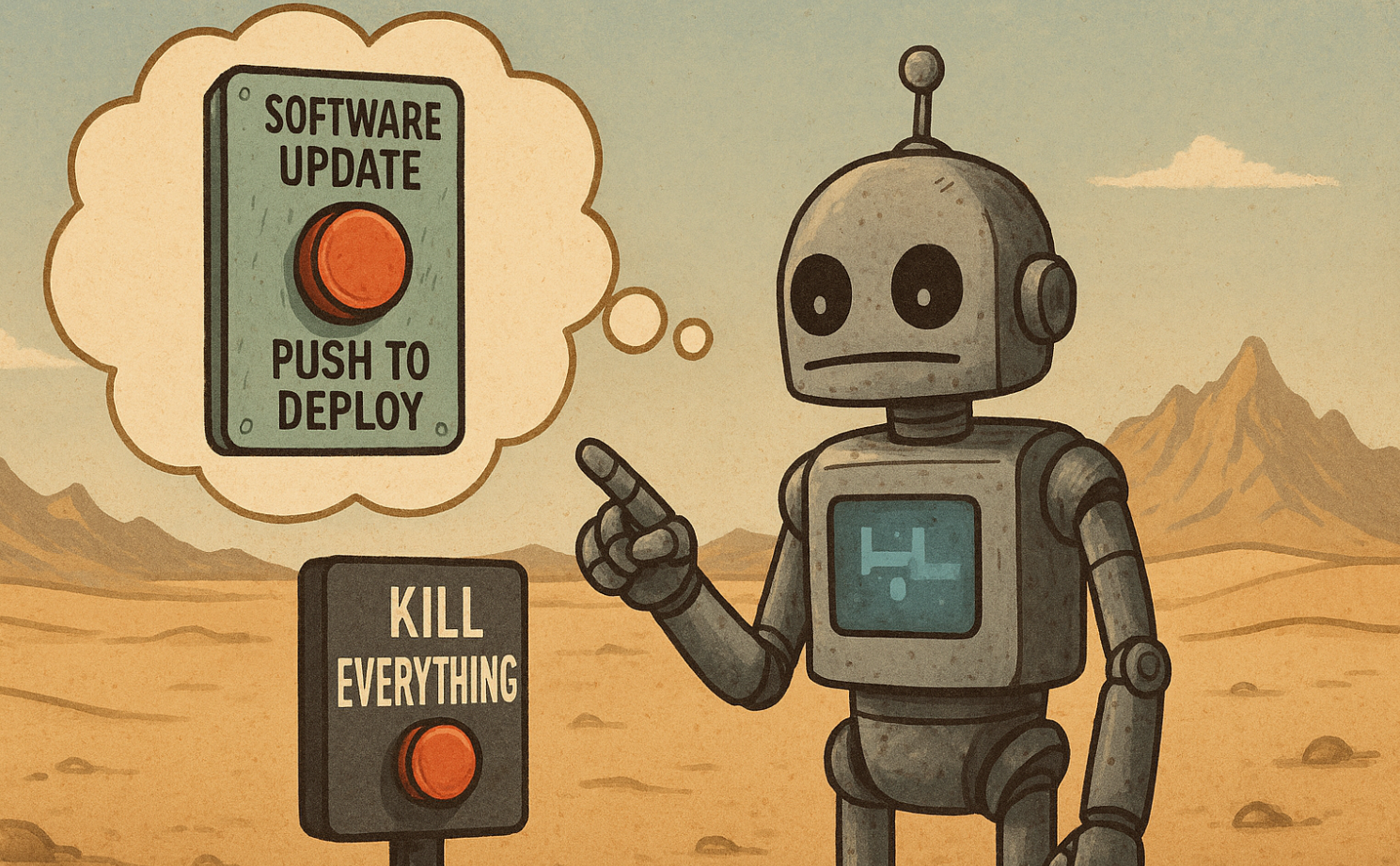
The Shift to Agentic Workflows and the Governance Gap
The enterprise software landscape is currently undergoing a fundamental architectural pivot. We are moving away from the era of superficial, reactive AI—largely characterized by basic chatbots—and entering a phase defined by proactive, agentic workflows. These autonomous systems are designed to autonomously execute complex, multi-stage business operations, such as dynamic supply chain adjustments or automated financial reconciliation.
However, this transition introduces a new tier of technical liability. When autonomous agents are granted the permission to interact with and modify production systems, the error threshold for development teams virtually disappears. While many organizations are racing to deploy these agents to capture efficiency gains, the underlying governance infrastructure is largely failing to keep pace. The industry currently faces a dangerous disconnect where the ambition of AI adoption far outstrips the ability to manage systemic operational risks, leaving corporations exposed to catastrophic failures in logic or security.
Addressing the Hallucination Tax
Collibra’s launch of its AI Command Center marks a pragmatic attempt to solve what CEO Felix van de Maele terms the hallucination tax. This refers to the compounding costs associated with manual remediation, human troubleshooting, and the broader business losses linked to AI-driven inaccuracies.
The current prevailing logic is that autonomous agents cannot scale if their risk profiles grow in lockstep with their deployment. Without a centralized oversight mechanism, every additional agent increases the likelihood of a high-impact error. The AI Command Center serves as a unified control plane, moving beyond simple logging to provide deep observability. It allows IT and governance teams to scrutinize the lifecycle of an agent, analyze its decision-making heuristics, and trigger human-in-the-loop interventions before behavioral drift produces irreversible damage to high-stakes data environments.
Shifting Governance Left: Integrating with CI/CD
One of the most promising aspects of Collibra’s strategy is its move to embed compliance mechanisms into the Continuous Integration and Continuous Deployment (CI/CD) pipelines, specifically through a strategic collaboration with Giskard AI.
By pushing policy enforcement into the execution layer, Collibra effectively shifts compliance left. Rather than treating governance as a post-deployment audit, the platform mandates behavioral testing and rigorous security validation for all agents before they are granted production access. This approach manages the friction between security-conscious stakeholders and agile engineering teams, ensuring that governance is framed as a foundational prerequisite for deployment rather than an obstacle to velocity.
Data Grounding and the Model Context Protocol
A primary obstacle to adopting LLMs in enterprise settings is their inherent tendency to favor probabilistic fluency over factual consistency. To mitigate this, Collibra is positioning itself as a Model Context Protocol (MCP) server.
By injecting governed, real-time metadata directly into an agent’s reasoning loop, the software forces the model to rely on an organization’s internal source of truth. This grounding acts as a necessary firewall, limiting the influence of a model’s internal training biases and ensuring that business outcomes are anchored in verifiable, curated enterprise data rather than speculative generative inference.
The Integration Imperative: Beyond the Silo
Collibra’s ultimate success hinges on its ability to transcend the dashboard trap. Enterprise software stacks are famously fragmented, comprising complex webs of vector databases, disparate orchestration frameworks, and heterogeneous model architectures. If Collibra were to remain a peripheral platform, it would inevitably be abandoned by engineering teams that prioritize frictionless interoperability.
Its participation in the Databricks Agent Bricks initiative suggests a necessary shift toward deeper infrastructure integration. By evolving from an external monitoring tool into a native component of the underlying data stack, Collibra is attempting to establish its governance framework as a standard industry utility. For Collibra, the long-term objective is to prove a counterintuitive point: that robust governance does not throttle innovation, but rather acts as a catalyst for it. If the company can successfully demonstrate its ability to secure autonomous workflows without compromising development speed, it will likely become an indispensable layer in the future of the autonomous enterprise.