
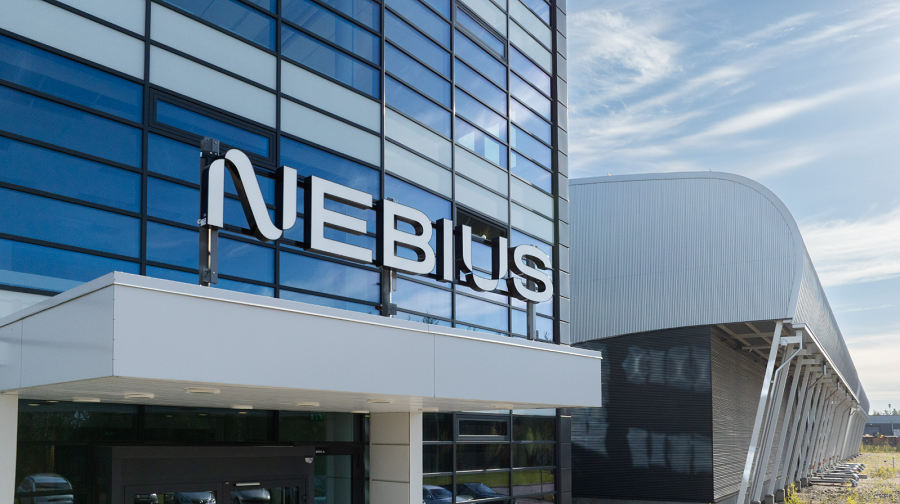
Strategic Consolidation in the AI Infrastructure Stack
Nebius Group NV, the Netherlands-based AI infrastructure provider, has announced the acquisition of software startup Eigen AI Inc. for $643 million. This move represents a tactical shift in the competitive landscape of AI-as-a-Service (AIaaS), where hardware availability—specifically massive GPU clusters—is no longer the sole differentiator.
For Nebius, this acquisition is an effort to move up the value chain. By integrating Eigen AI’s optimization software into its Token Factory managed inference service, Nebius is effectively transitioning from a dumb pipe provider of raw compute to a platform-level solution capable of boosting model efficiency and performance at the software layer.
The Optimization Mandate: Beyond Raw Compute
The core value of Eigen AI lies in its ability to manipulate the fundamental architecture of neural networks. By targeting kernels—the microscopic code snippets that dictate GPU behavior—Eigen AI utilizes CUDA and Triton to replace suboptimal operations with high-performance modules.
In an era where Nvidia H100s and other high-end chips are perpetually in short supply and expensive to run, software-driven efficiency is becoming the primary lever for competitive advantage. Eigen AI’s toolkit for compressing model weights and optimizing KV cache management directly addresses the biggest pain points for enterprise AI developers: high latency and excessive memory consumption during inference.
Lowering the Barrier for Post-Training and Fine-Tuning
Perhaps the most significant aspect of this acquisition is the integration of LoRA (Low-Rank Adaptation) technologies. The current trend in the industry is moving away from training massive foundational models from scratch toward fine-tuning existing open-source models for specific business domains.
Traditional fine-tuning is resource-intensive, requiring the recalibration of vast parameter sets that can crush infrastructure budgets. LoRA changes this calculation by modifying a discrete subset of external parameters. By embedding Eigen AI’s expertise in post-training directly into its Token Factory, Nebius is providing developers with a streamlined pathway to production-grade, domain-specific AI without the prohibitive costs of standard retraining workflows.
Industry Implications: Building a Silicon Valley Foothold
The absorption of the Eigen AI team into Nebius carries a clear geographical and strategic imperative. By establishing a professional engineering hub in the San Francisco Bay Area, Nebius is signaling that it aims to compete for top-tier talent in the epicenter of the AI revolution.
This signals a maturation of the AI infrastructure sector. As the market consolidates, pure-play data center operators who lack software-defined differentiation will struggle to maintain margins. Nebius is opting for a vertical integration strategy, betting that customers will prefer a vendor that provides both the raw GPU horsepower and the specialized software tools necessary to make those models run faster, leaner, and more economically.
Expect this trend of hardware-software convergence to continue, as infrastructure providers fight to become the indispensable middleware layer between foundation model builders and enterprise users.