
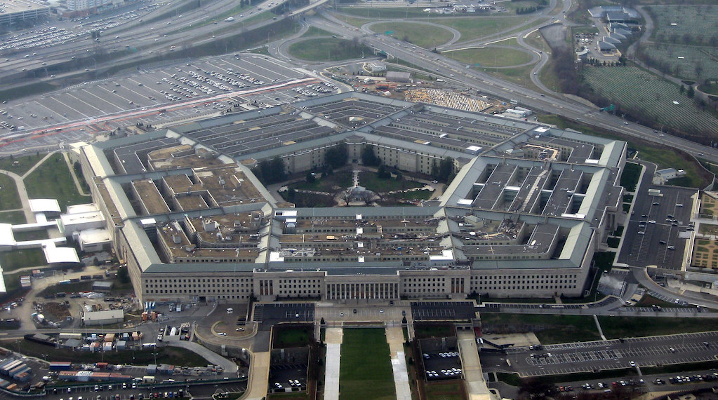
Strategic Consolidation: The Pentagon’s New AI Supplier Ecosystem
The U.S. Department of Defense has formalized its AI procurement strategy by awarding contracts to seven prominent technology firms: Amazon Web Services, Google, Microsoft, Nvidia, OpenAI, SpaceX, and the well-capitalized startup Reflection AI. This move signals a deliberate effort to institutionalize artificial intelligence within the nation’s high-security military infrastructure.
By integrating these vendors into the internal GenAI.mil portal, the Pentagon is moving beyond experimental pilot programs. With over 1.3 million personnel already utilizing the platform—generating hundreds of thousands of bespoke AI agents—the Defense Department is scaling a standardized digital ecosystem. Critically, these new contracts facilitate the deployment of AI capabilities within Impact Level 6 and 7 environments, which are designated for the processing and storage of highly classified information.
Bridging Technical Capabilities with Defense Requirements
The inclusion of these specific firms suggests the Pentagon is prioritizing companies that control the entire AI stack, from raw compute to high-level reasoning models.
Nvidia’s involvement, for instance, spans far beyond its ubiquitous GPU hardware. With its foray into neural network development tools and the integration of Mamba-Transformer hybrid architectures, the company is positioning itself as the primary engine room for military-grade AI. These Mamba-based models, which promise higher efficiency in memory consumption compared to standard Transformers, are likely essential for high-speed, onboard decision-making systems.
SpaceX’s inclusion reflects a broader trend of vertical integration. Following its merger with xAI, the company now commands the Grok model family, theoretically positioning it to provide specialized, independent language models for aerospace and battlefield maneuvers. Potential future acquisitions, such as Cursor’s Composer, could further automate complex software development workflows for defense engineers.
The Geopolitical and Ethical Chasm with Anthropic
The conspicuous absence of Anthropic from this roster highlights a deepening rift between Silicon Valley’s safety-centric AI purists and the national security apparatus. The Trump administration’s designation of Anthropic as a supply chain risk in February effectively blacklists the firm from DoD integration.
This conflict centers on a fundamental dispute over mission limitations. Anthropic’s refusal to permit its Claude models to be used for all lawful purposes—fearing applications in domestic surveillance or lethal autonomous weapon systems—directly clashes with the Pentagon’s requirement for operational flexibility.
The resulting legal battle serves as a bellwether for the broader tech industry. AI companies are increasingly forced to choose between strict alignment to responsible AI frameworks and participation in the multi-billion-dollar federal contracting sector. The irony of the situation is compounded by the fact that the Department of Defense continues to utilize the restricted Claude Mythos Preview model. This suggests that while the executive branch is politically signaling via its risk designation, the military’s technical leadership recognizes a capability gap that only Anthropic’s high-level vulnerability-detection models can currently bridge.
Industrial Implications: The Future of Classified AI
For the industry, this procurement wave solidifies a shift toward closed, vendor-controlled ecosystems within the government. By funneling development through GenAI.mil, the Pentagon is essentially creating its own private AI marketplace.
The objective is clear: improve data synthesis and reduce the latency of complex decision-making workflows. However, this centralized approach also creates a lock-in effect. Companies that secure these contracts are not just selling software; they are becoming deeply embedded architectural partners in the future of U.S. defense, where the line between private sector innovation and state-sanctioned military utility continues to vanish.