
The Senate’s Preemptive Strike on Prediction Markets
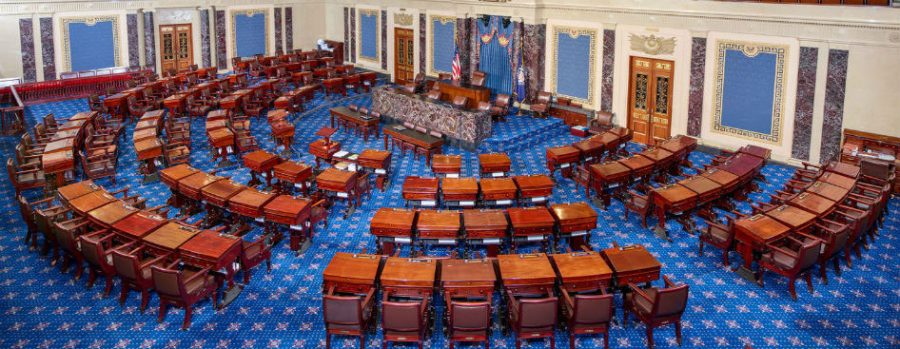
The U.S. Senate’s unanimous decision on April 30 to ban its members, staff, and officers from participating in prediction markets signals a definitive pivot in how Washington intends to regulate the intersection of private wagering and public policy. By enforcing this prohibition immediately, the legislative body is acknowledging the inherent conflict of interest that emerges when those who shape geopolitical events and federal policy can simultaneously profit from speculating on their outcomes.
This legislative maneuver moves beyond standard ethics codes, targeting a rapidly maturing class of financial assets that behave differently than traditional stock portfolios. Unlike stocks, which rely on earnings reports and market sentiment, prediction markets derive their value from real-world, binary outcomes. Consequently, any proximity to sensitive or classified information creates a significant and arguably insurmountable informational imbalance.
Mitigating the Insider Advantage
The core driver behind this bipartisan mandate, spearheaded by Sen. Bernie Moreno, is the preservation of institutional integrity. For years, the normalization of congressional stock trading has faced criticism from ethics watchdogs, but prediction markets—such as Kalshi and Polymarket—present a more novel concern. Because these platforms aggregate sentiment and data on specific legislative or national security outcomes, the mere existence of a bet by a lawmaker could be perceived as a signal of internal intent or private knowledge.
By preempting the potential for insider wagering, the Senate is attempting to fortify public trust. Even if a lawmaker lacks the intent to manipulate an outcome, the optic of a high-ranking official taking a financial position on a policy debate they are tasked with moderating is functionally toxic to democratic transparency. The bipartisan consensus on this issue suggests that policymakers are acutely aware that financial cynicism risks eroding the legitimacy of the legislative process itself.
Regulatory Cross-Pollination and Industry Response
The Senate’s action is likely a precursor to broader federal oversight. There is already momentum in the House of Representatives to codify similar restrictions, effectively creating a federal standard that prohibits elective officials from engaging with these speculative instruments.
The move is also triggering a ripple effect at the state level, with leadership such as Governor Kathy Hochul advocating for parallel restrictions for state employees. This suggests a growing top-down mandate to treat prediction platforms as sensitive financial infrastructure rather than mere entertainment or niche prediction tools.
Industry participants, including Kalshi’s Tarek Mansour, have expressed support for the measure, framing the ban as a mechanism to legitimize their own platforms. Kalshi and its peers are currently walking a precarious line, attempting to appease the Commodity Futures Trading Commission (CFTC) while distinguishing themselves from gambling platforms. By welcoming these restrictions, these companies are effectively signaling a desire for a clean market where non-public, sensitive information is strictly prohibited, thereby aligning their regulatory compliance with federal expectations.
The Unresolved Regulatory Horizon
Despite the Senate’s proactive stance, the broader landscape remains fraught with uncertainty. The CFTC continues to grapple with how to formally classify these markets—determining whether they should be overseen as derivatives, commodity exchanges, or something entirely new.
The Senate’s swift intervention serves as a clear warning shot to both the industry and the regulatory agencies: when the line between public duty and private capital becomes too thin, the legislature will intervene to enforce a separation. As these platforms continue to gain liquidity and public attention, the pressure will only increase for a robust federal framework that balances innovation in financial technology with the fundamental requirement that public service remains untainted by the pursuit of speculative gain.